
In any industrial finishing environment, the transition between surface preparation and coating is a critical process boundary. Much like sealing a blast enclosure, how that transition is controlled directly impacts quality, efficiency, and operational reliability.
Within steel fabrication, blasting and painting are often treated as separate stages. However, true performance is not defined by individual pieces of equipment, but by how well each stage operates together as a complete system. When blasting, airflow, dust extraction, material handling, and coating processes are fully integrated, greater control is achieved across the entire operation.
Protoblast has delivered engineered surface treatment solutions across Australia for decades. One consistent outcome is clear. Facilities that adopt a complete blast and paint system achieve stronger process control, improved productivity, and more predictable results.
Creating Stronger Outcomes Through Integration
As part of a major facility expansion, a New South Wales based structural steel supplier set out to increase production capacity and modernise its operations. This created an opportunity to rethink not only the scale of the operation, but how each stage of surface treatment could work together more effectively.
In many fabrication environments, blasting and painting systems evolve over time. While functional, this can lead to layouts where processes operate independently. Material handling becomes less efficient, airflow is harder to control, and coordination between stages can introduce delays.
By approaching the project from a system perspective, the focus shifted toward creating alignment across all stages. The goal was to ensure that materials moved seamlessly, environmental conditions remained controlled, and each part of the operation supported the next. This laid the foundation for a more efficient and predictable workflow.
A Complete System Approach to Surface Treatment
Protoblast worked closely with the client to design a solution that addressed the full surface treatment process, from abrasive blasting through to painting.
Rather than treating each component as a standalone installation, the system was engineered as a connected solution. This included the blast chamber, abrasive recovery system, dust collection, paint fume extraction, and material handling infrastructure.
By designing these elements together, the facility was able to maintain control over airflow, containment, and workflow. This level of integration ensures that each stage performs consistently, while supporting the efficiency of the overall process.
Delivering an Integrated Blast and Paint Solution
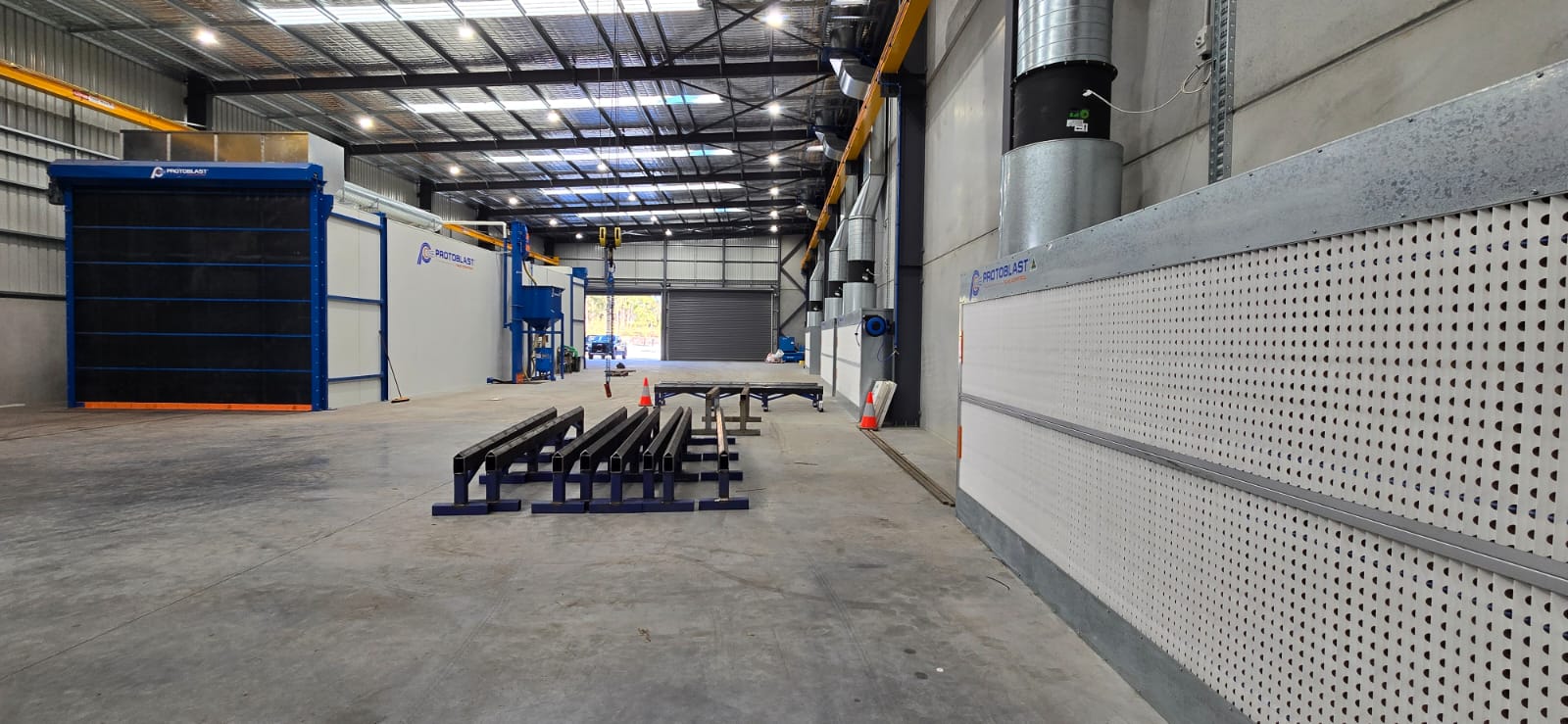
At the centre of the installation was a purpose-built abrasive blasting chamber positioned to maximise both performance and accessibility within the facility.
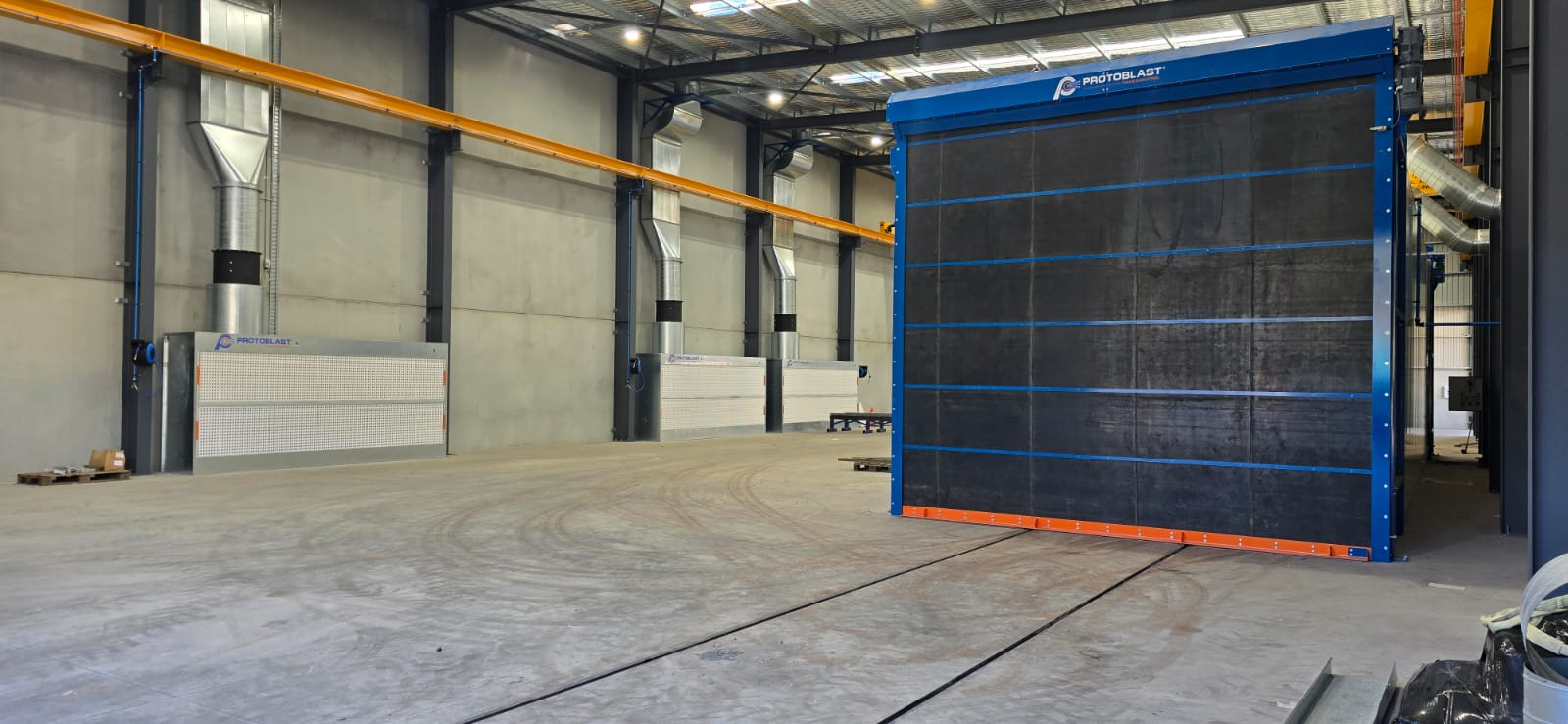
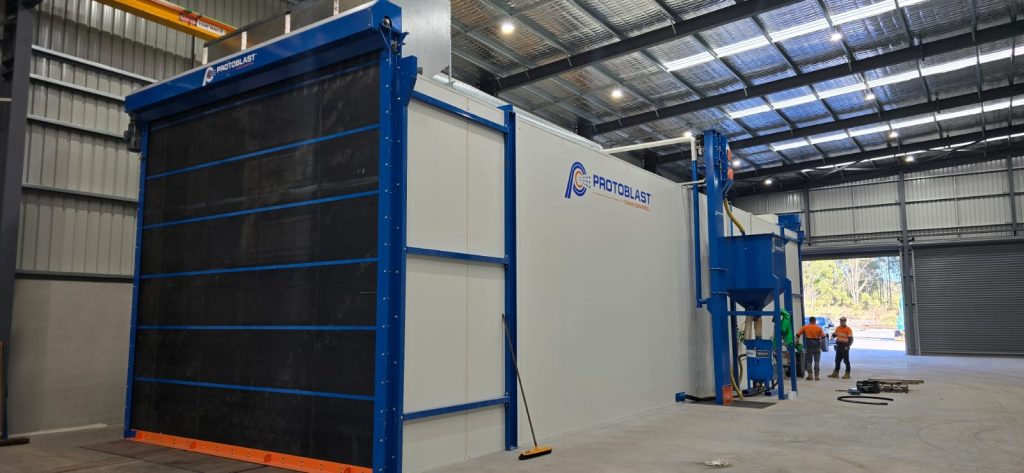
The chamber measured 19 metres in length, 4.5 metres in height, and 5 metres in width. Constructed using insulated panels, it was designed to contain dust effectively while maintaining stable airflow conditions during blasting operations. This level of containment is essential for supporting both operator visibility and downstream processes.
An integrated partial abrasive recovery system was incorporated into the design. Housed within a prefabricated steel pit, the system allowed for efficient reuse of abrasive media while reducing manual clean-up requirements. Installing the pit early in the construction phase also streamlined the overall build process and reduced installation time.
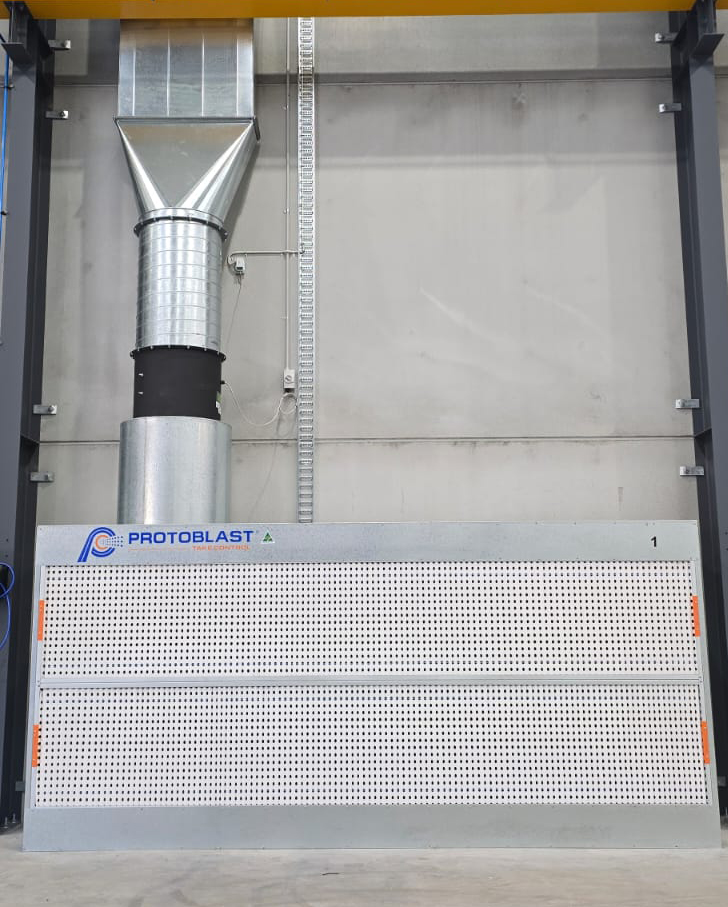
To preserve valuable internal floor space, the dust collection system was positioned externally under an awning. This allowed for effective dust extraction without impacting internal workflow. On the opposite side of the building, a dedicated paint fume extraction system was installed to support coating operations and maintain clean air conditions during application.
Material movement through the system was carefully considered. An in-floor rail system was installed to allow for smooth and controlled transport of steel components through the blast chamber and into the painting area. This reduced manual handling and eliminated trip hazards, contributing to a safer working environment.
Roller door systems were installed at both ends of the blast chamber, allowing for clear access and continuous movement of materials. This supported a steady workflow and reduced delays between blasting and painting stages.
The Advantage of a Complete Blast and Paint System
By integrating all elements into a single engineered system, the facility achieved a higher level of operational control.
Environmental conditions became more stable, with dust and fumes effectively contained and extracted at their source. This improved air quality throughout the facility while supporting compliance with safety requirements.
Operational efficiency also improved. Materials moved more smoothly between stages, reducing downtime and improving throughput. The streamlined process allowed for more predictable production scheduling and faster turnaround times.
Surface preparation and coating quality benefited as well. By maintaining control between blasting and painting, surfaces remained clean and ready for coating. This improved adhesion and helped achieve a consistent finish across all products.
The integrated design also simplified maintenance and reduced long term operational strain. At the same time, the reduction in manual handling and improved layout contributed to safer working conditions for personnel.
Restoring Control Through System Design
A blast and paint operation performs best when it operates as a cohesive system. When airflow, extraction, access, and material handling are aligned, each stage supports the next, creating a controlled and efficient process.
This project demonstrates the value of taking a complete system approach. By moving beyond standalone solutions and focusing on integration, the facility achieved measurable improvements in productivity, quality, and reliability.
A Smarter Approach to Steel Fabrication
For steel fabricators looking to expand or modernise, adopting a complete blast and paint system represents a practical and effective way to improve performance.
By designing each component to work together, Protoblast helps restore control across the entire surface treatment process. The result is an operation that is more efficient, more consistent, and better equipped to meet the demands of modern fabrication.
To optimise your blasting and painting operations with a fully integrated solution, connect with Protoblast and engage a team with decades of experience delivering engineered outcomes.