

Recent changes to Work Health and Safety (WHS) requirements are placing a greater focus on how businesses manage workplace risks and demonstrate compliance with recognised safety standards. For industrial operations, this means ensuring facilities, equipment, and work practices continue to align with current expectations for worker health and safety.
While the recent legislative change applies specifically to New South Wales, it also reinforces a broader industry focus on best-practice safety, risk management, and workplace compliance across a range of industrial environments.
What Has Changed?
From 1 July 2026, section 26A of the NSW Work Health and Safety Act requires businesses to comply with applicable Codes of Practice or demonstrate that an alternative approach achieves an equivalent or higher standard of health and safety. While Codes of Practice are not regulations themselves, they now represent the minimum performance standard expected by SafeWork NSW. Inspectors may refer to these Codes during workplace inspections, and courts can use them as evidence of what is considered reasonably practicable.
For industrial businesses, this highlights the importance of reviewing facilities, equipment, and operational procedures to ensure workplace risks are effectively managed. Industrial operations that utilise abrasive blasting should pay particular attention to the Abrasive Blasting Code of Practice and the engineering controls it promotes.
What Does This Mean for Facility Owners and Operators?
Many industrial operations rely on abrasive blasting as part of their manufacturing, maintenance, fabrication, mining, transport, marine, or infrastructure activities. These processes can present a range of workplace hazards, including airborne dust, noise, hazardous coatings, and respirable crystalline silica. As regulatory scrutiny continues to increase, businesses should ensure their facilities are designed and maintained with effective engineering controls and safe work practices in mind.
Areas worth reviewing include ventilation and dust extraction systems, blast room containment and airflow management, controls for hazardous dusts and airborne contaminants, operator protection systems, equipment inspection and maintenance procedures, and exposure monitoring and risk management practices. Taking a proactive approach to these areas can help improve workplace safety, reduce operational risks, and support compliance with current WHS expectations.
Why Best Practice Still Matters
Although the legislative update is specific to NSW, the principles outlined in the Abrasive Blasting Code of Practice remain relevant to businesses across Australia. Codes of Practice continue to provide recognised guidance on managing workplace risks and achieving safe operational outcomes. They are widely regarded as a benchmark for good practice in facility design, operation, and risk management.
Whether operating in NSW or elsewhere in Australia, businesses that align their facilities with established industry practices are often better positioned to protect workers, improve operational efficiency, and minimise the risk of costly downtime or future compliance challenges. For facilities that incorporate abrasive blasting operations, investing in appropriate engineering controls and maintaining equipment to recognised standards can deliver both safety and productivity benefits.
The Protoblast Advantage
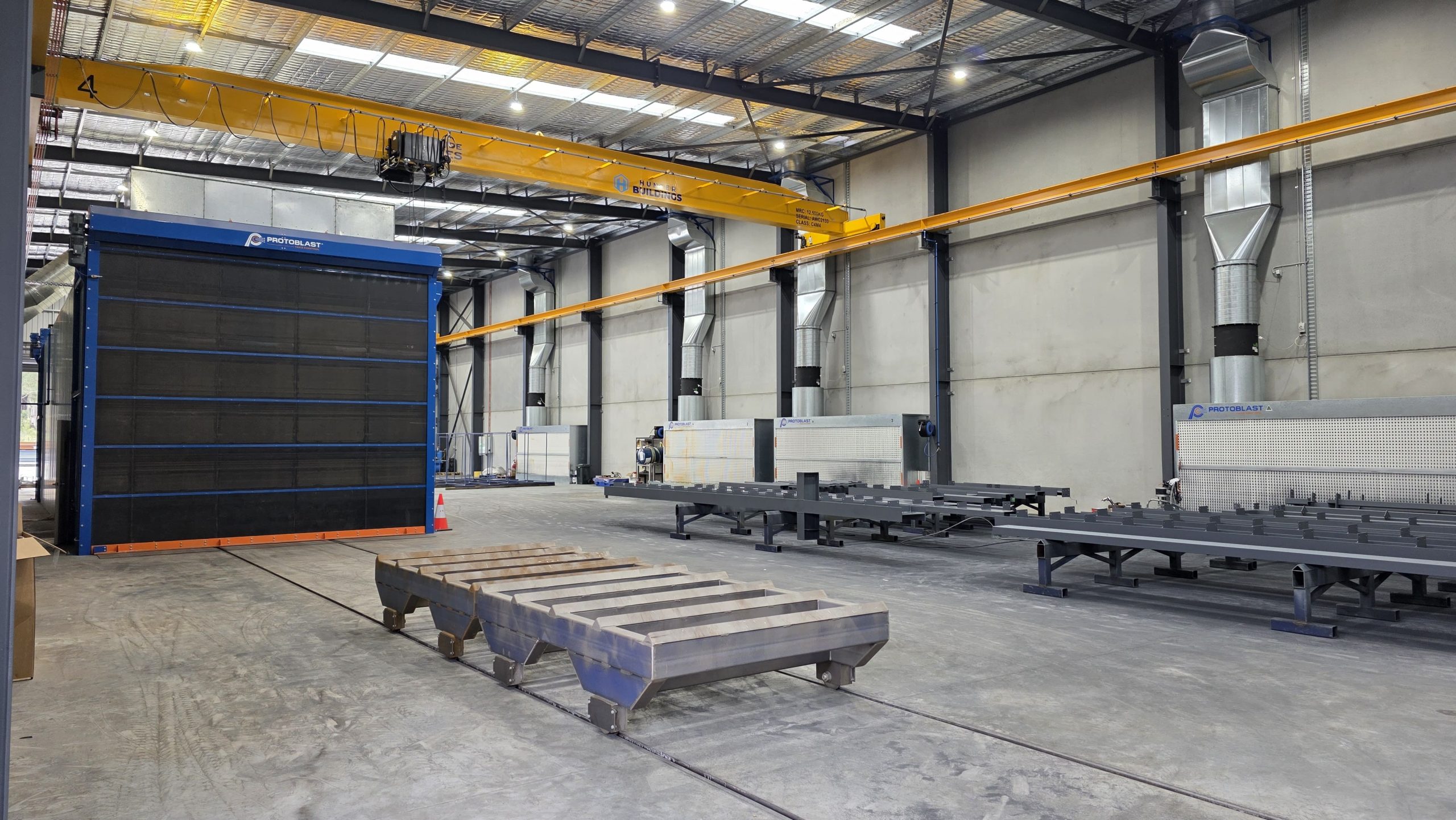
For more than 50 years, Protoblast has been designing, manufacturing, and installing abrasive blasting facilities for Australian industry. Throughout that time, the company has remained committed to delivering systems that prioritise safety, reliability, and long-term performance.
Protoblast’s solutions incorporate key engineering controls, including efficient dust extraction systems, blast room containment, abrasive recovery technology, and effective ventilation management. These features not only support safer workplaces but also help customers achieve greater productivity, reduced maintenance requirements, and improved operational efficiency.
As safety expectations continue to evolve, Protoblast remains committed to helping customers implement practical, reliable solutions that align with recognised industry standards and best practices. From new facility designs to upgrades and system reviews, customers can rely on decades of experience and engineering expertise to support their operations.
Protoblast continues to deliver reliable, high-quality abrasive blasting solutions that stand the test of time. With decades of experience and a strong commitment to customer satisfaction, the company remains a trusted partner for businesses across Australia. For more information or inquiries, contact Protoblast on 1300 011 583 or email sales@protoblast.com.au.